
15 Best Webflow SaaS Templates (2026): Ranked & Compared for Founders
A custom SaaS marketing site built by an agency runs $2,000 to $50,000+ and takes weeks to months. A Webflow template costs $29 to $129 and ships in days. The decision isn't *whether* to use a template — it's *which one*. And that's where most founders lose hours.
The Webflow marketplace holds thousands of templates, and dozens of listicles rank them. The problem with nearly all of those lists is that they screenshot templates they don't own, skip the specs that actually matter (page count, CMS collections, e-commerce), and recommend options they've never installed. You end up comparing marketing copy instead of real capability.
This list is different because we sell these 15 templates. Every page count, CMS collection number, and e-commerce flag below comes from the actual template files — not from a marketplace description. We've grouped them by the founder stage that fits each one, so you can pick in minutes instead of hours. If you're new to the platform itself, start with our complete Webflow platform guide.
Key Takeaways
- CodeFlow ($129, 37 pages, dark mode) is the strongest all-rounder for AI and SaaS businesses — the deepest page count in the catalog
- MugenAI ($29, compact CMS) is the best budget launch pad for solo founders validating an idea
- NovaPlus ($129, 35+ pages, multi-layout) is the most flexible if you're still deciding your visual direction
- A custom SaaS marketing site costs $2,000–$50,000+ (Devolfs, 2026); these templates cost $29–$129 and ship in days
- The deciding factors are stage (validation vs. growth), e-commerce (will you sell plans on-site?), and brand (dark vs. light)
All 15 Webflow SaaS Templates Compared
The table below is the spec matrix buyers actually want. Every row links to a live demo and a real purchase page — not a marketplace screenshot. We built it from our own template files, so the page counts and CMS numbers are exact.
| Template | Price | Pages | CMS | E-commerce | Theme | Best For |
|---|---|---|---|---|---|---|
| CodeFlow | $129 | 37 | Yes | Yes | Dark | AI/SaaS all-rounder |
| NovaPlus | $129 | 35+ | Yes | Yes | Light | Startup flexibility |
| DarkFlow | $129 | 35+ | Yes | Yes | Dark | Dark-brand SaaS |
| Synched | $129 | 35+ | Yes | Yes | Dark | Dark multi-layout |
| Zestful | $129 | 35 | 7 collections | Yes | Light | CMS + e-commerce depth |
| DigiFlow | $129 | 35+ | Yes | Yes | Light | Selling digital products |
| Unbound | $129 | 35+ | Yes | Yes | Light | Timeless, platform-ready |
| Saaporo | $79 | 30+ | 10 collections | Yes | Light | Growing SaaS (new) |
| Obsidix | $79 | 30+ | Yes | Yes | Dark | Interactive / custom cursor |
| NightPulse | $79 | 23+ | Yes | Yes | Dark | SaaS, AI tools, agencies |
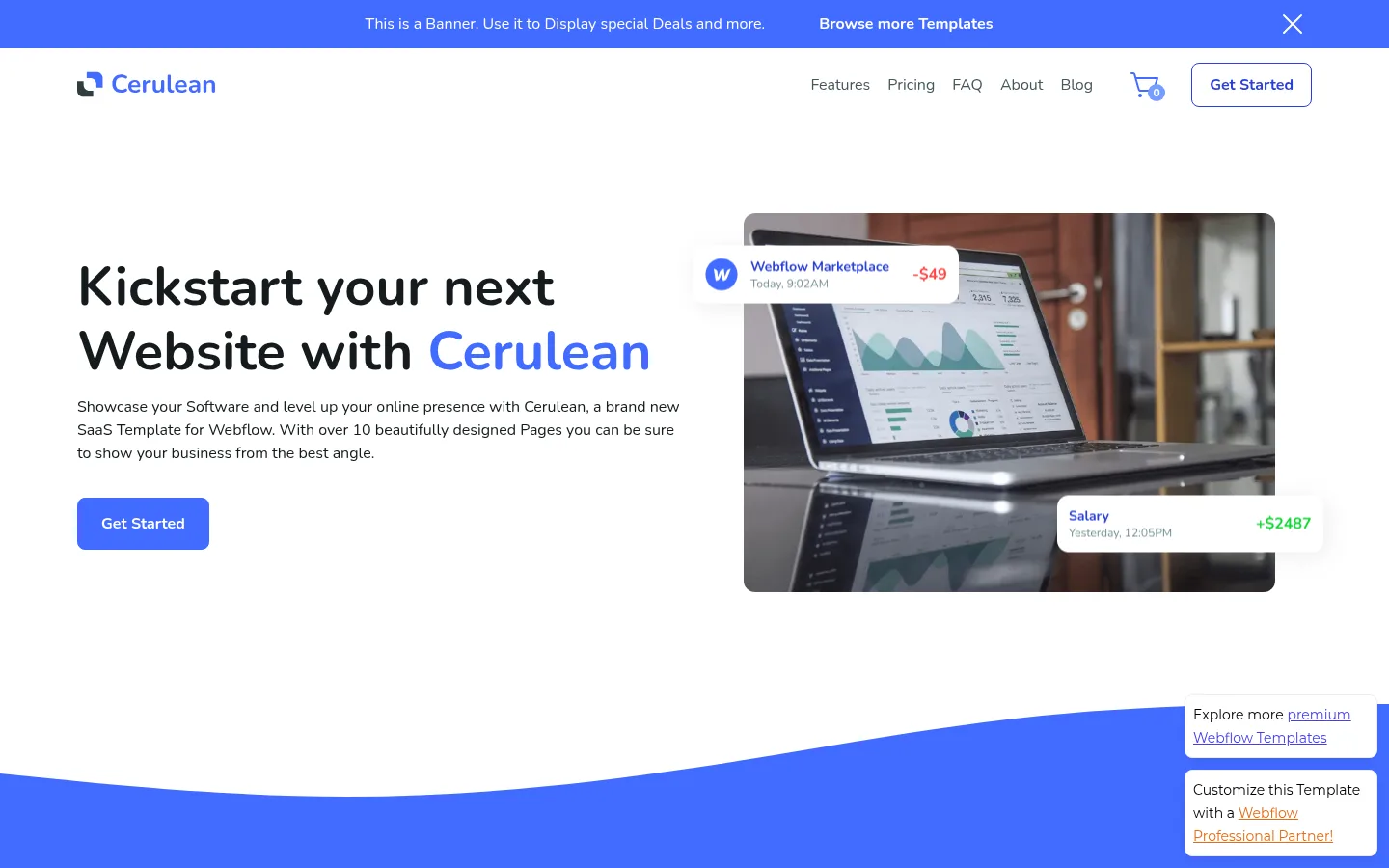
| Cerulean | $79 | 18+ | Yes | Yes | Light | E-commerce + blog |
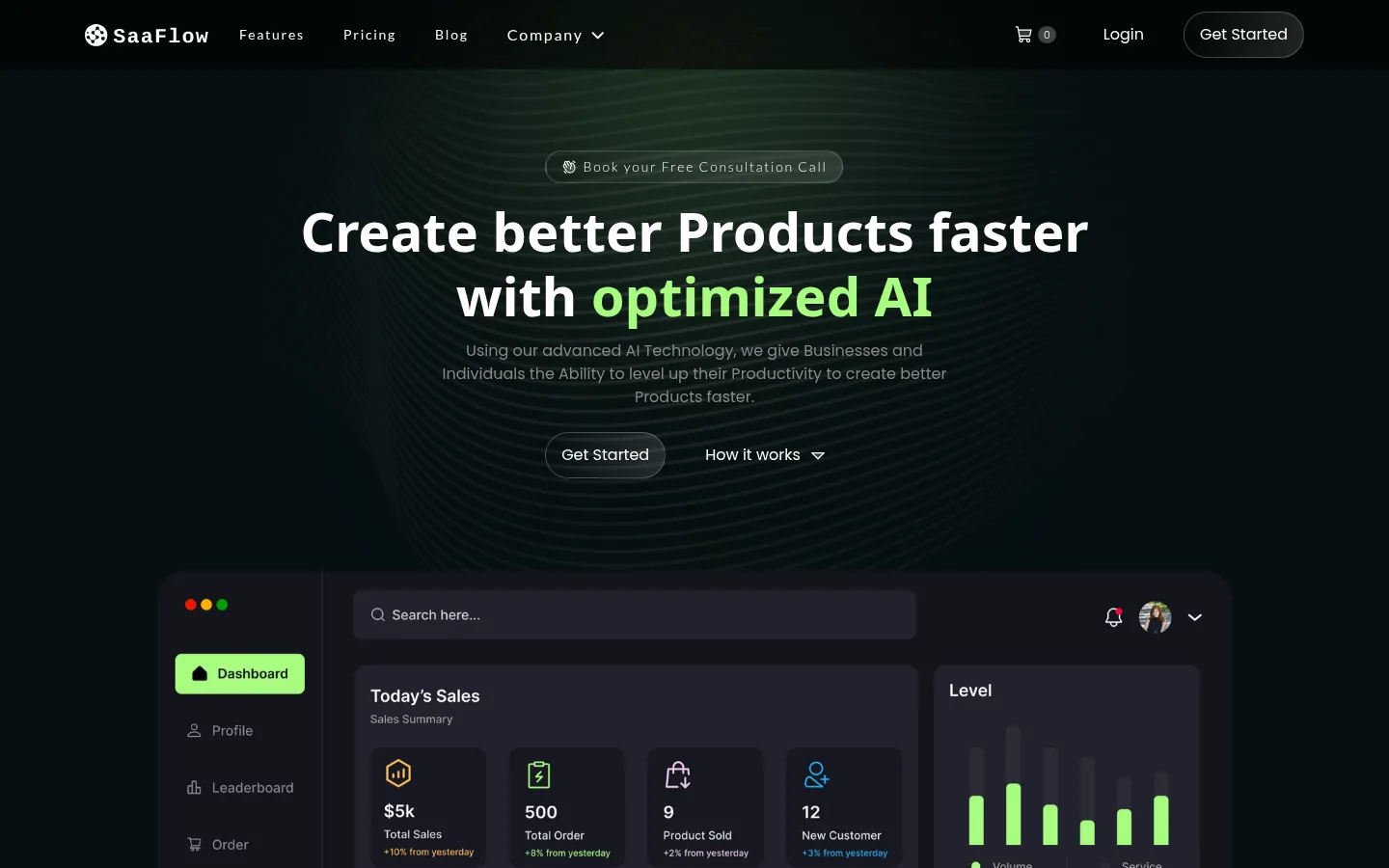
| SaaFlow | $79 | 25+ | 7 collections | Yes | Dark | Dark mid-tier SaaS |
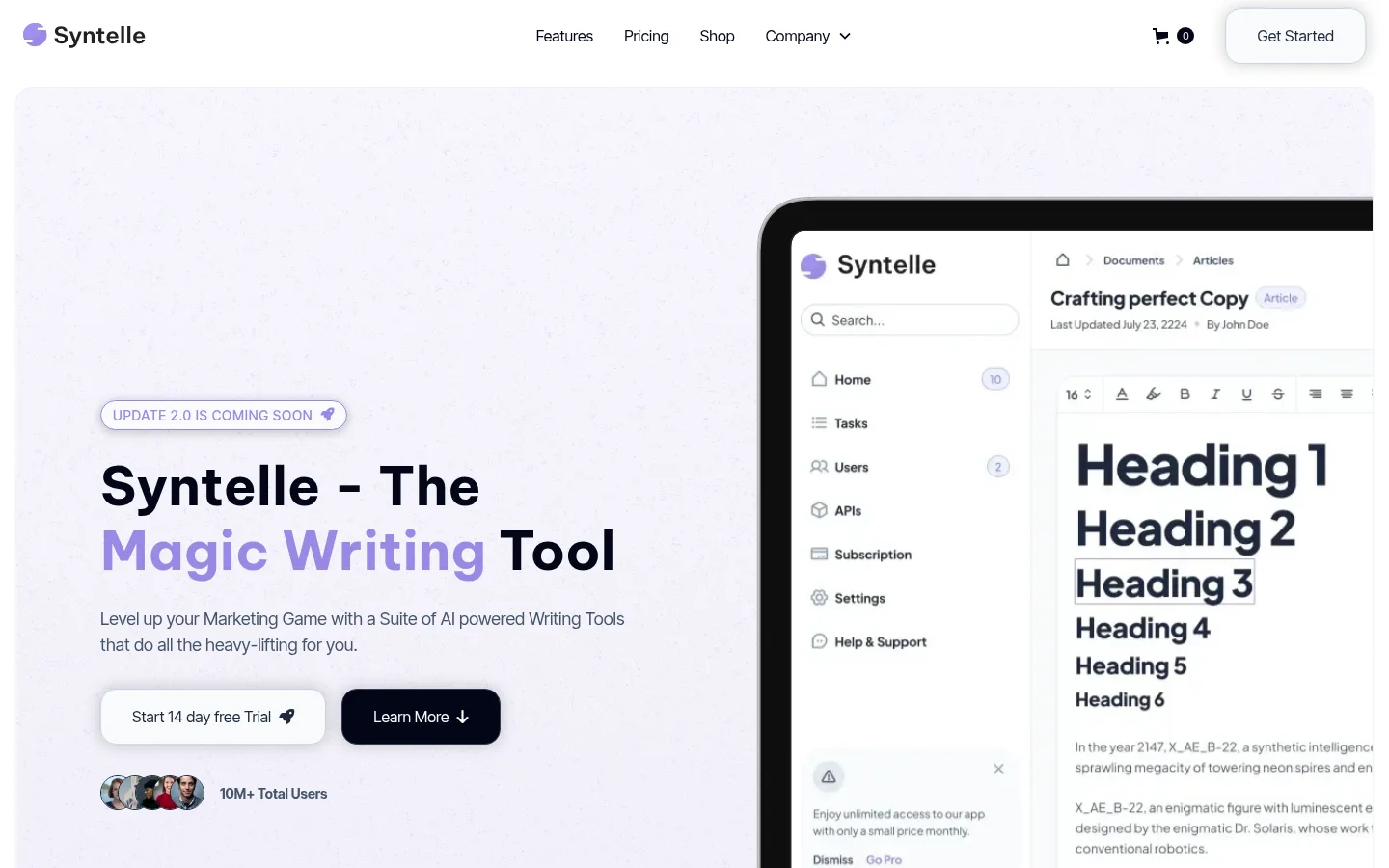
| Syntelle | $79 | 27+ | Yes | Yes | Light | Launch + sell AI SaaS |
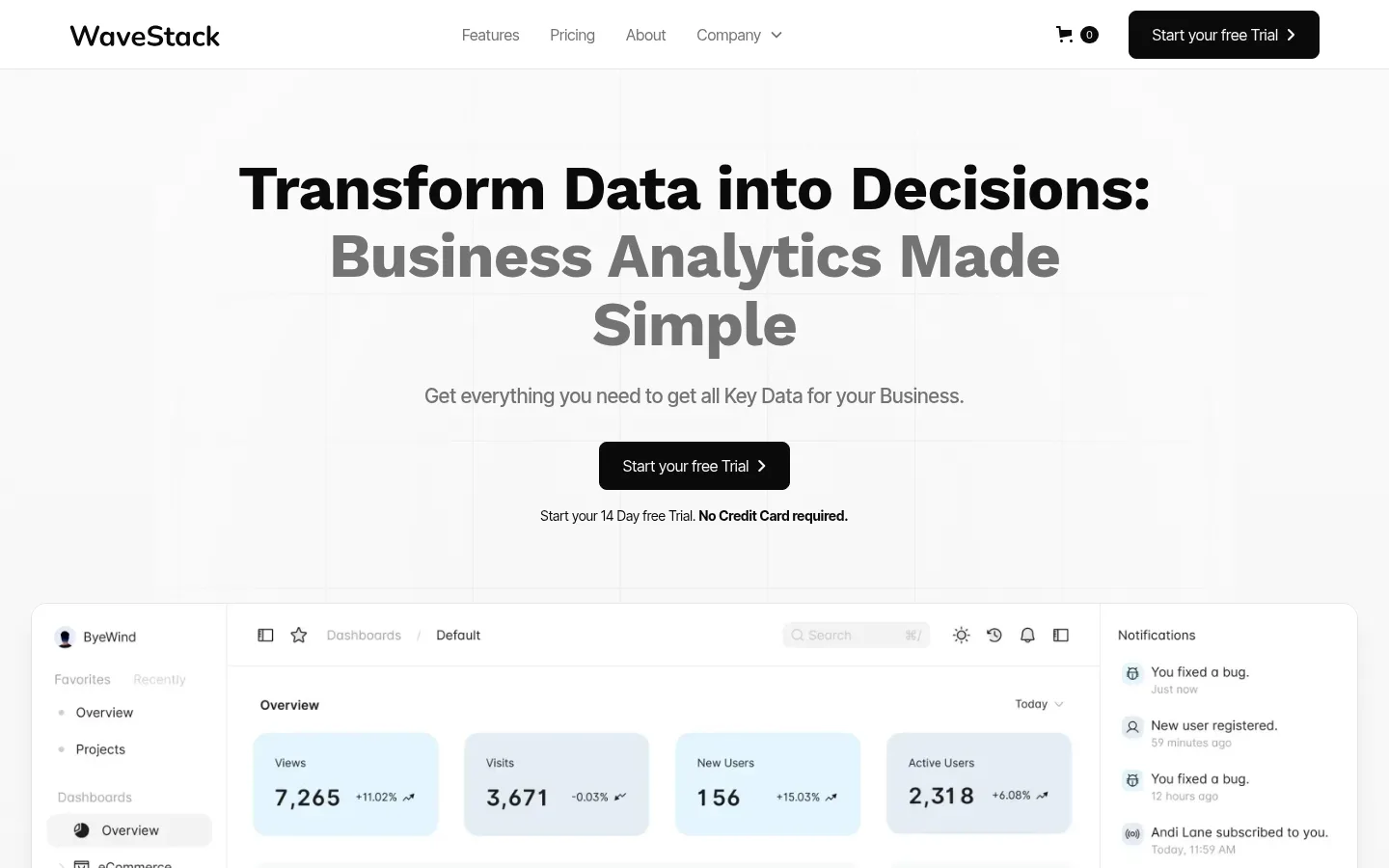
| WaveStack | $79 | 24+ | Yes | Yes | Light | Modern startups / AI |
| MugenAI | $29 | 13+ | Yes | No | Light | Pre-launch budget |
A few things jump out from this matrix. First, almost every template here includes both CMS and e-commerce — that's not standard across the marketplace, where many "SaaS" templates are static. Second, the $129 tier is consistently a 35+ page, multi-layout build, while the $79 tier sits around 24–30 pages. Third, MugenAI is the only option without e-commerce, which is exactly why it can hit $29.
Before the detailed picks, one note on how conversion factors into this choice. The average B2B SaaS website converts 2.3% of visitors to leads, while top performers exceed 10% (Oliver Munro, 2026). A template won't fix a weak offer, but a fast, well-structured one with clean CMS and pricing pages removes the friction that holds most SaaS sites below that average.
Best for Pre-Launch and Budget: The $29–$79 Tier
If you're validating an idea or bootstrapping, you don't need 37 pages. You need a fast, credible launch. These eight templates deliver that for $29 to $79 — and most still include full CMS and e-commerce, which is unusually generous at this price point. For context, an agency-built SaaS MVP runs $5,000 to $40,000 (Tenet, 2026), so even the top of this tier pays for itself more than a hundred times over.
MugenAI — The $29 Launch Pad
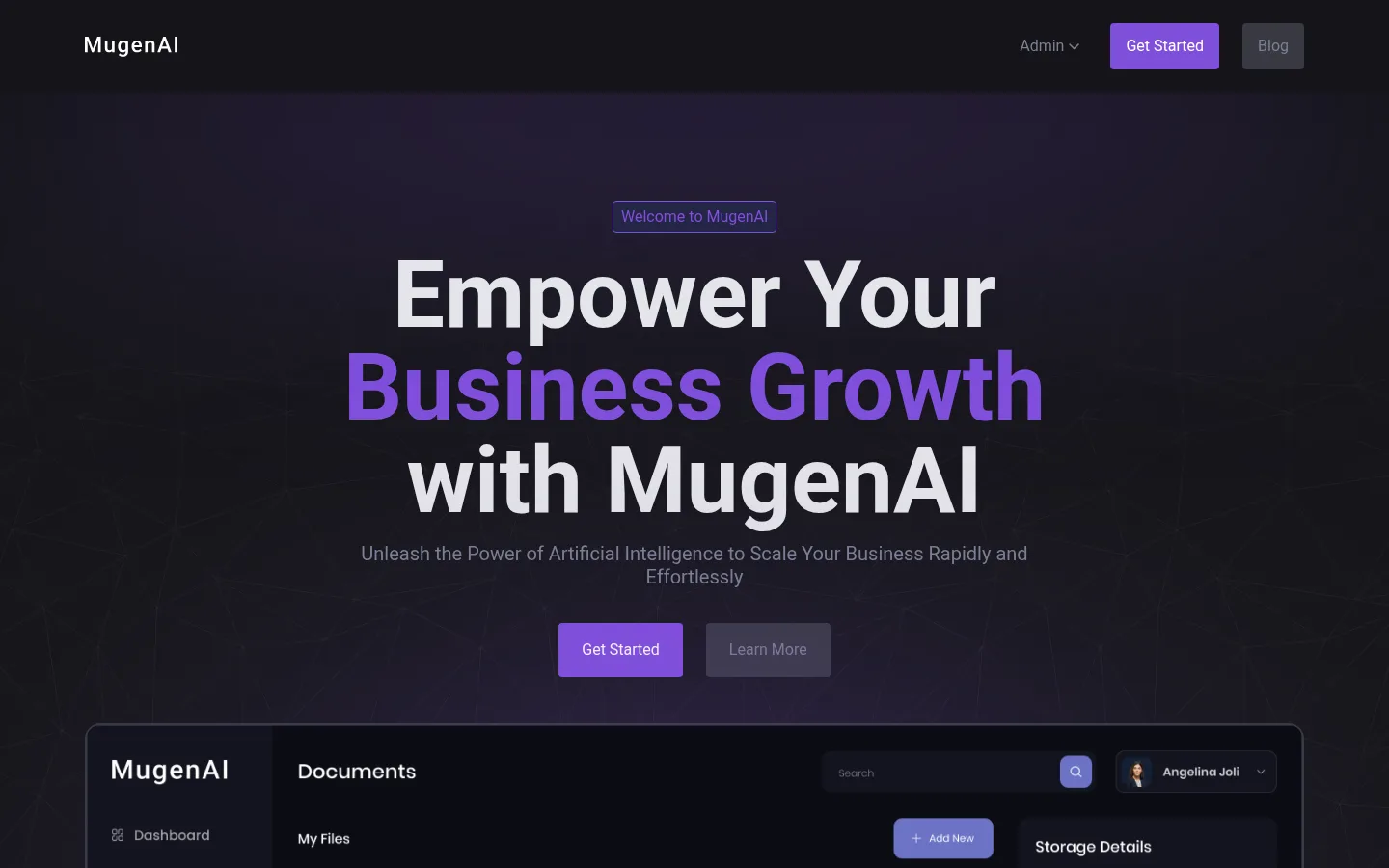
MugenAI is a compact CMS template built for small startups and entrepreneurs who need to get a business online today. It ships with a home page, blog, blog article and category CMS templates, legal pages, a style guide, and the standard utility pages (404, password, search results). It does not include e-commerce, which is the one capability it gives up to reach $29.
That trade-off is the right one for its audience. If you're pre-revenue, you almost certainly don't need on-site checkout yet — you need a credible home page, a place to publish, and clean code you can customize. MugenAI delivers exactly that. When you're ready to sell plans, you can either integrate Stripe or graduate to a template in the $79 tier.
The $79 Mid-Tier
The seven templates at $79 are where the value gets hard to beat. Each includes CMS and e-commerce, and most clear 24–30 pages. The differentiator between them is focus and aesthetic.
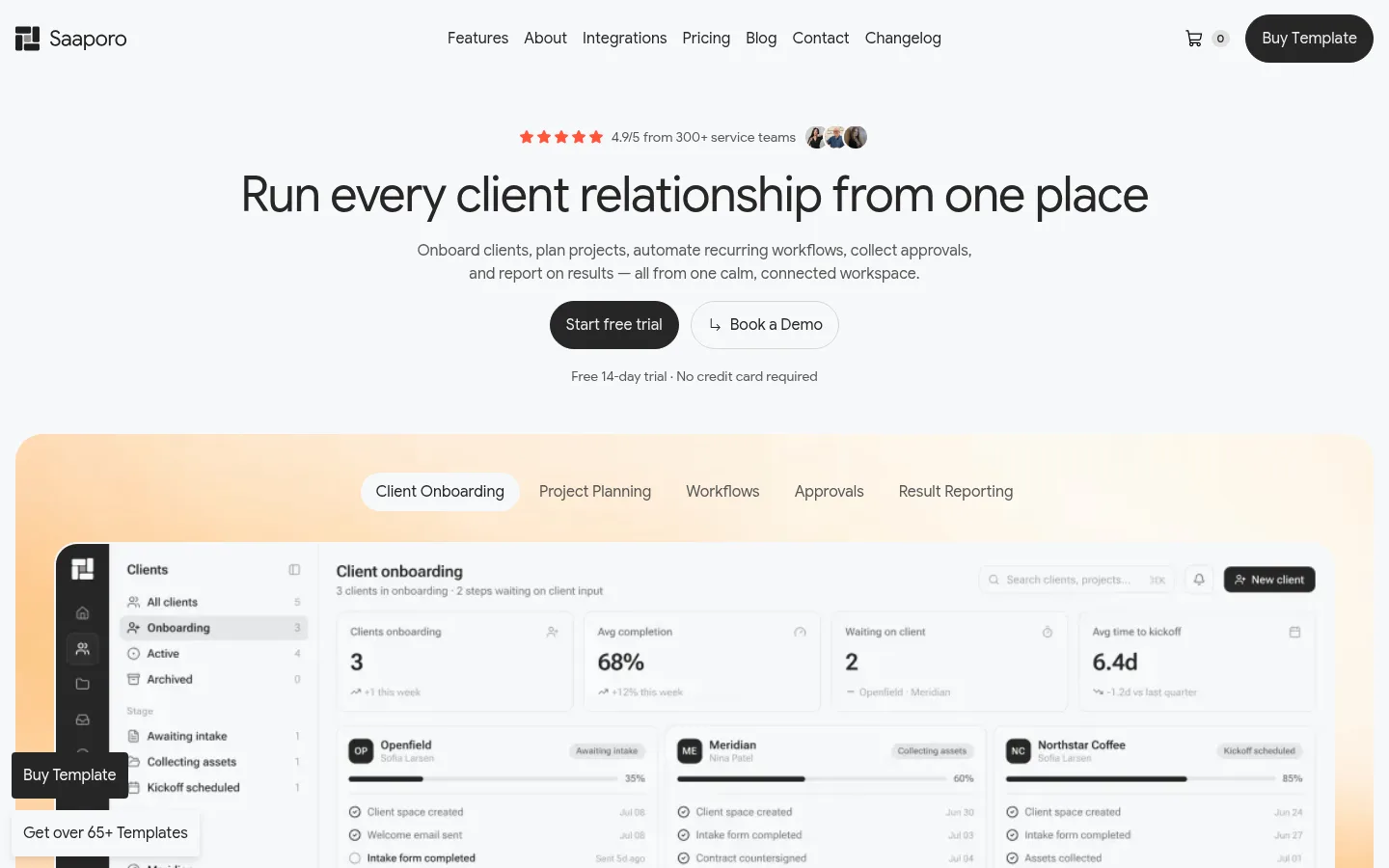
- Saaporo *(new)* — the richest $79 option, with 30+ pages and 10 CMS collections (blog, team, integrations, changelog, legal, and more), built-in e-commerce for pricing plans, an integrations marketplace, and a changelog system out of the box. If you want growth-stage depth at a mid-tier price, this is the pick.
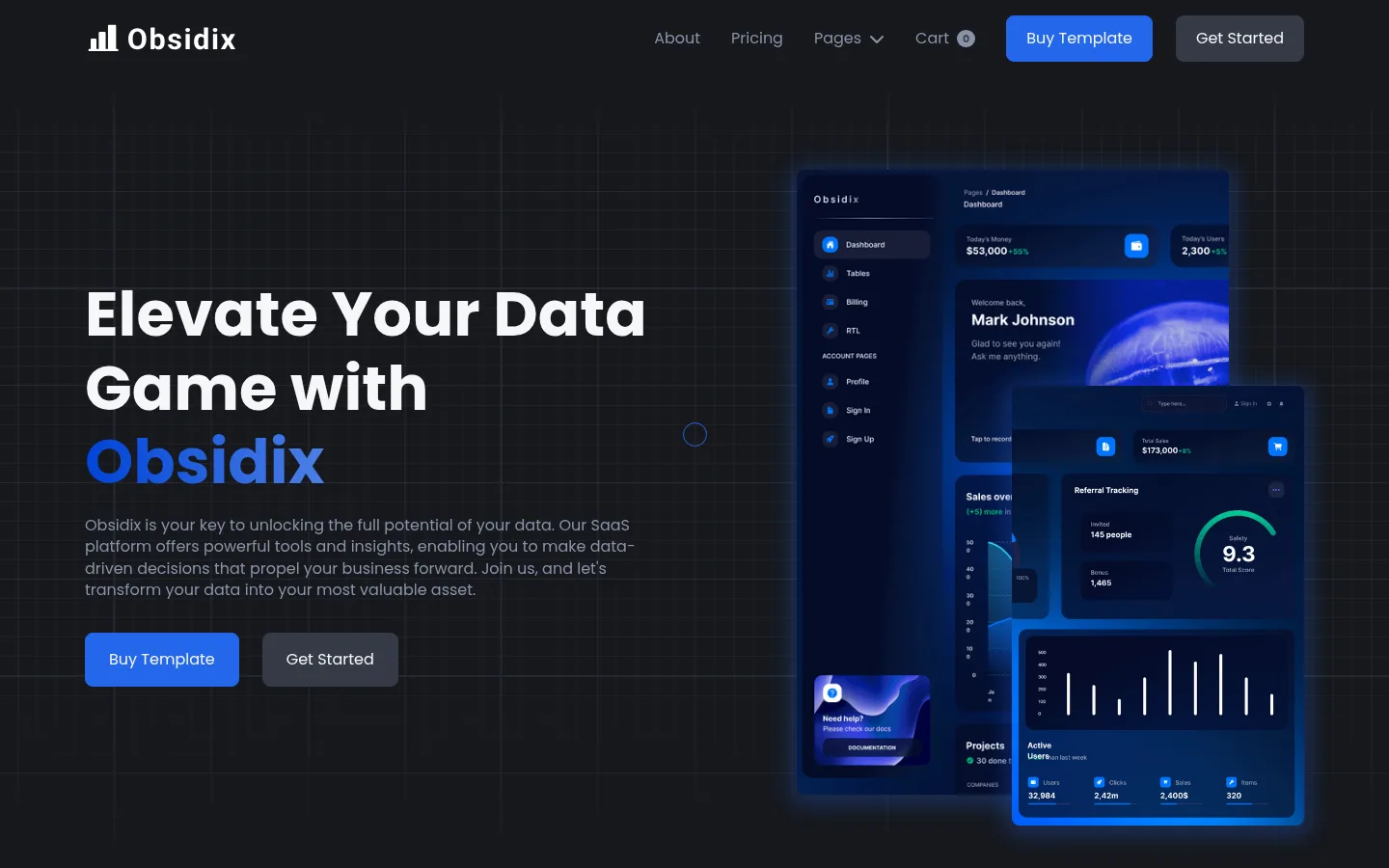
- Obsidix — an interactive SaaS template with custom cursor interactions across 30+ pages. Choose it if differentiation through motion matters to your brand and you want a site that feels premium rather than templated.
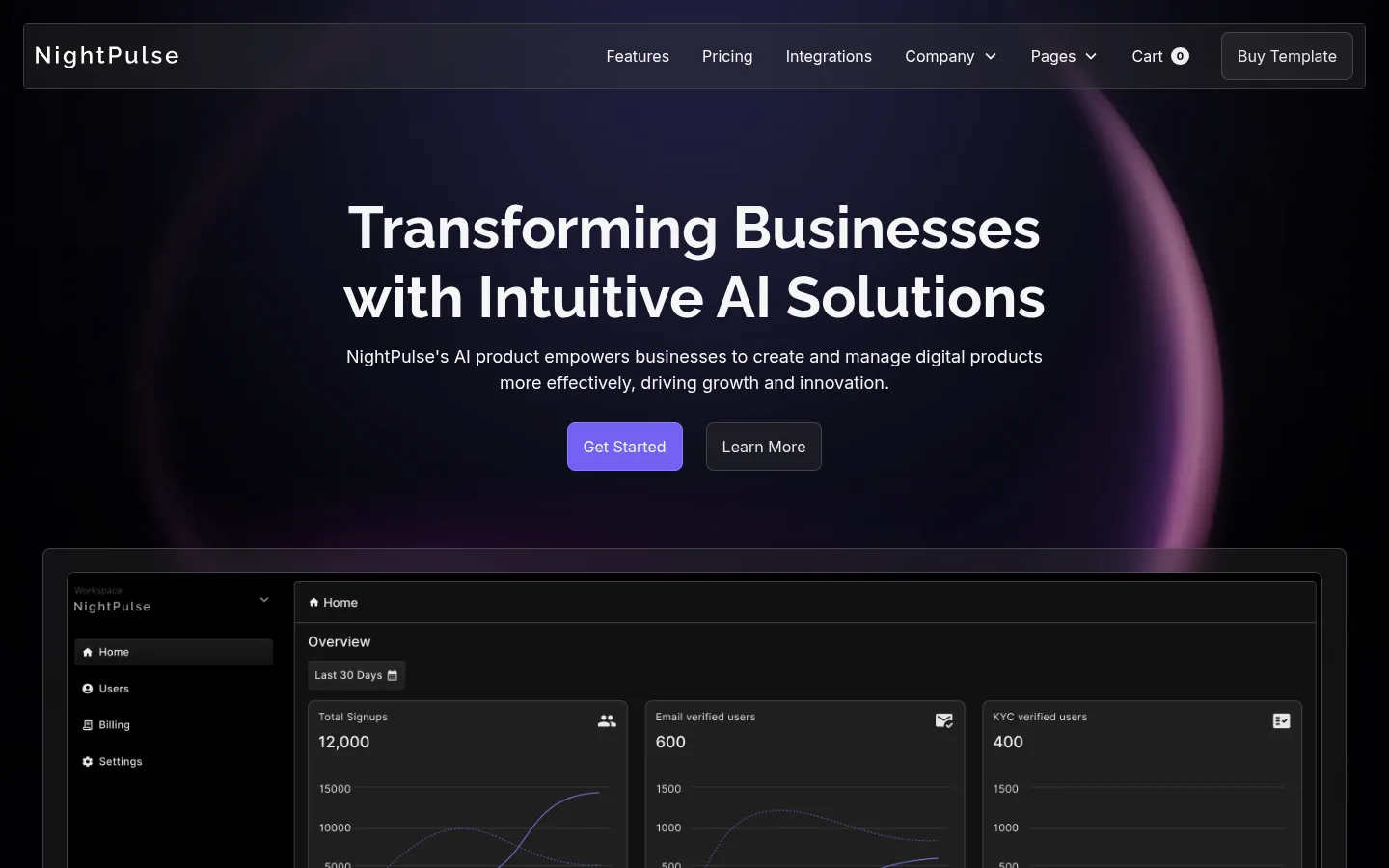
- NightPulse — a dark-mode template built for SaaS, AI tools, and agencies, with 23+ pages and full e-commerce. The natural choice if you're in the AI/dev space and want dark without paying $129.
- SaaFlow — a dark, timeless SaaS template with 25+ pages and 7 CMS collections. Sits between NightPulse and Saaporo on depth, with a more minimal design system.
- Syntelle — purpose-built to launch, market, and sell AI SaaS products, with 27+ pages including shop, download, and full account pages.
- WaveStack — a modern template for SaaS, startups, and AI products with 24+ pages and a clean, contemporary layout.
- Cerulean — a SaaS e-commerce template with blog CMS, team members CMS, and animations. The lightest of the $79 tier at 18+ pages; pick it if you want a timeless, smaller footprint with on-site selling.
Best for Growth-Stage SaaS: The $129 Tier
Once you have product-market fit and need marketing depth — multiple home layouts, blog variants, case studies, pricing, integrations, changelog, help center — the $129 tier delivers 35 to 37 pages with full CMS and e-commerce. This is the level where a template genuinely replaces a $15,000–$25,000 agency build (Dribbble, 2026), because the page architecture and CMS structure are already done.
CodeFlow — Best Overall ($129, 37 Pages)
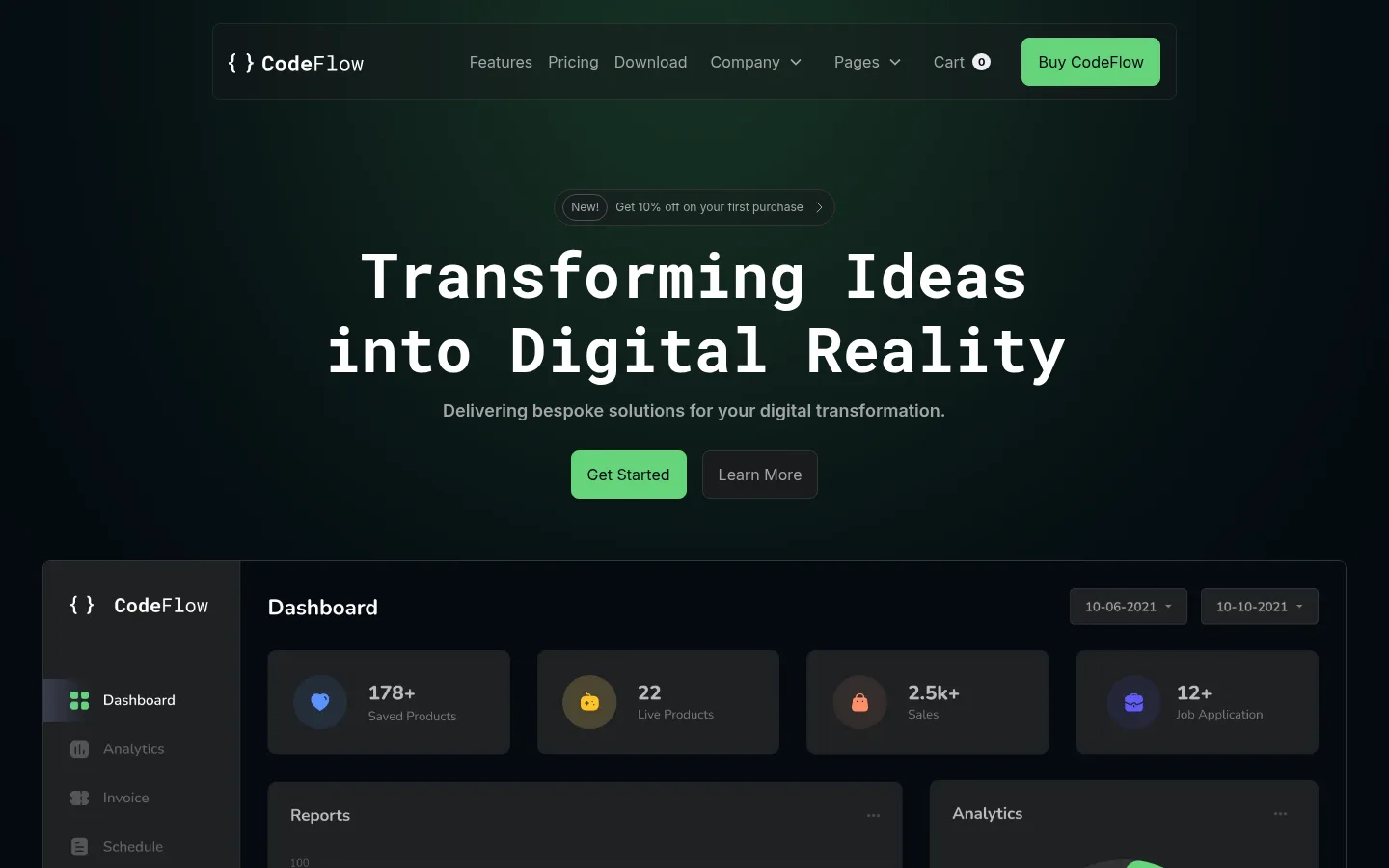
CodeFlow is a dark-mode SaaS template with 37 pages, the deepest page count in the entire catalog. It's built for SaaS and AI businesses and ships with three home variants, three feature variants, three blog variants, pricing, shop, career, contact, download, a full help center, team members and job listings CMS, blog CMS, and complete e-commerce (products, categories, checkout, PayPal, order confirmation).
It's the top all-rounder because it combines the most pages with a focused dark aesthetic and a structure that covers everything a growing SaaS needs to market and sell. If you're not sure which $129 template to pick, CodeFlow is the safe default.
NovaPlus — Most Flexible ($129, 35+ Pages)
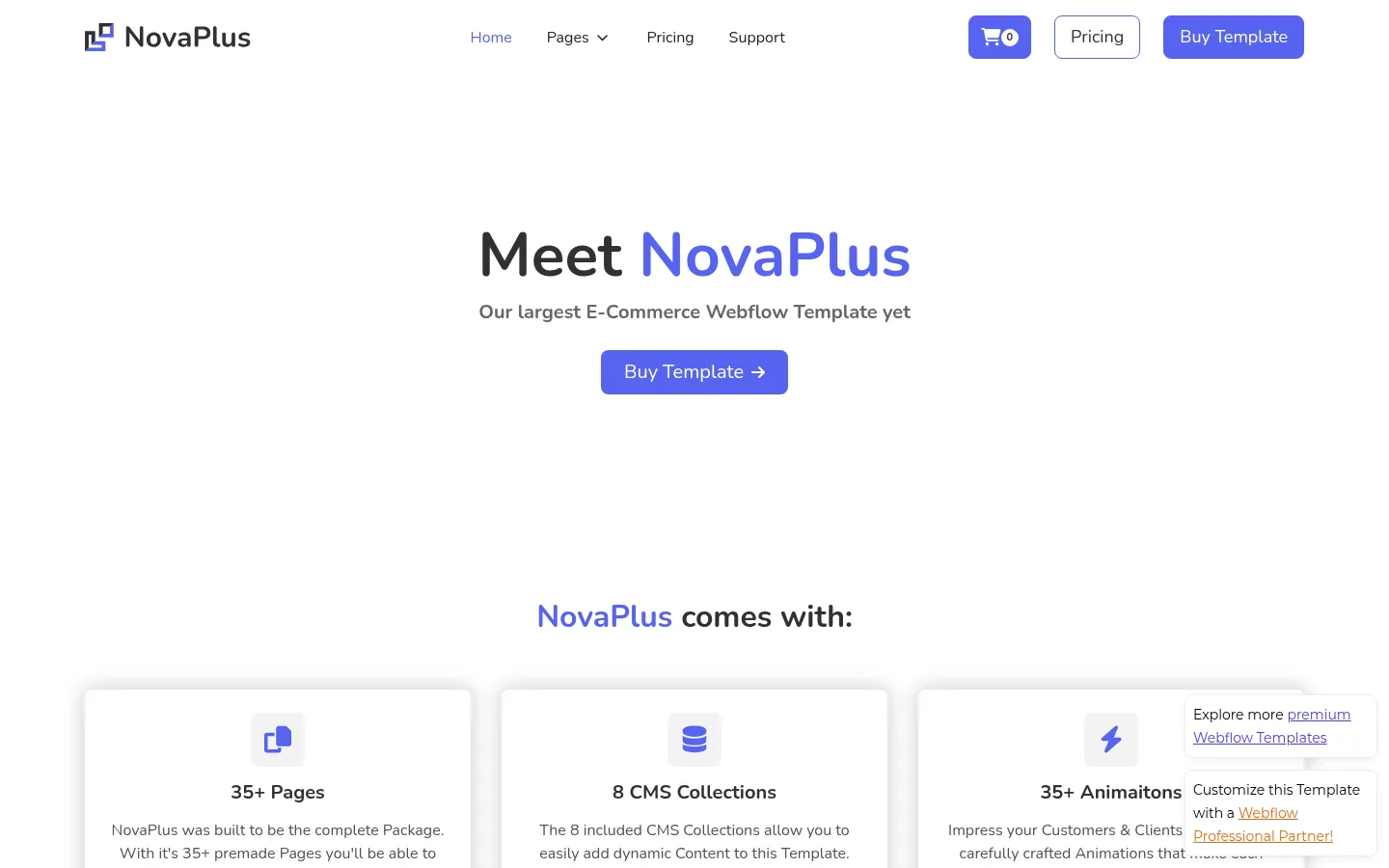
NovaPlus is a multi-layout template for startups and businesses with 35+ pages, three navigations, two footer styles, and full CMS and e-commerce. Where CodeFlow commits to a dark, AI-forward look, NovaPlus is clean, minimal, and deliberately neutral — which makes it the most flexible option if you're still deciding your visual direction or want a blank-ish canvas you can push toward any brand.
Zestful — Best for CMS and E-commerce Depth ($129)
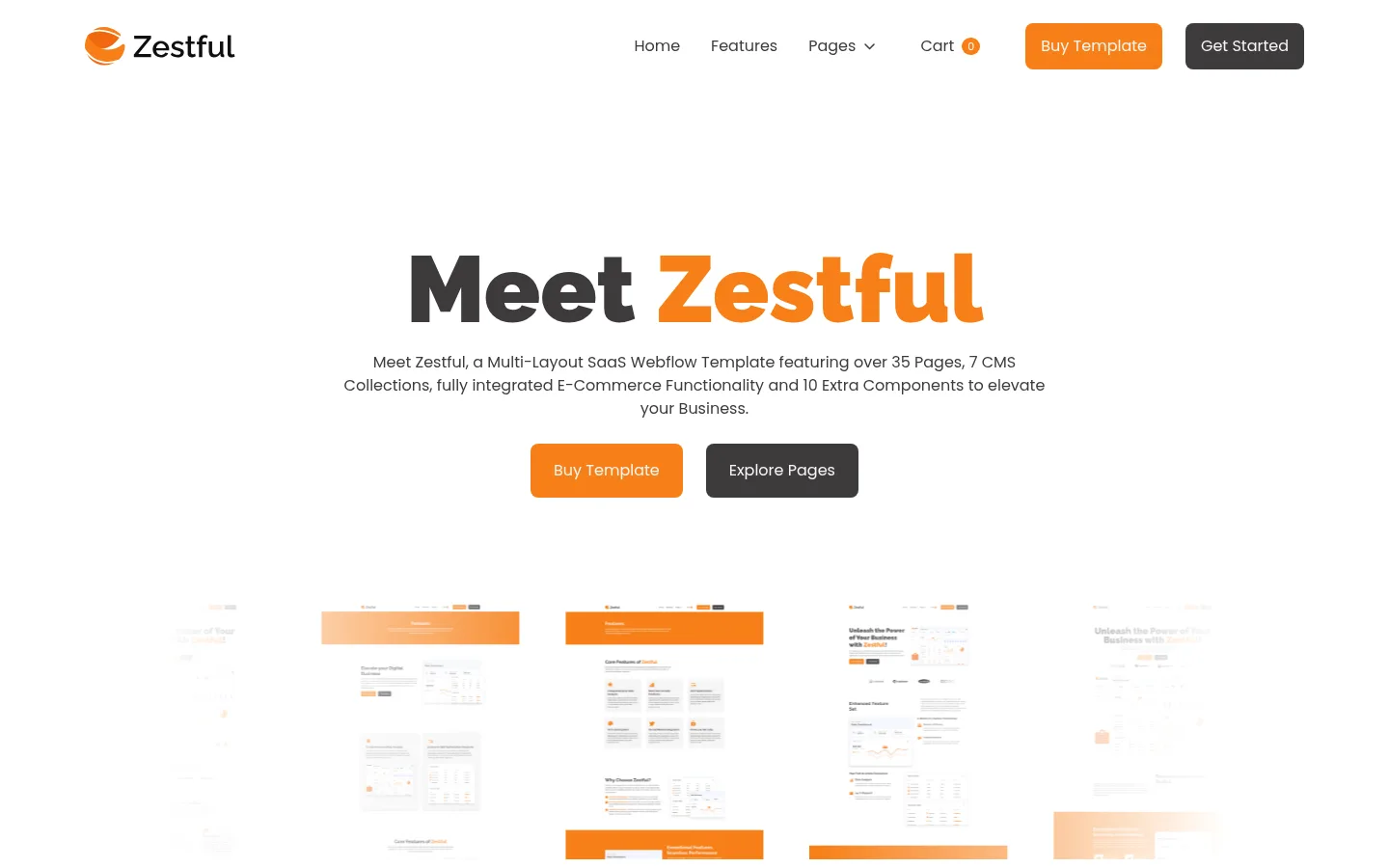
Zestful is a multi-layout SaaS template with 35 pages and 7 CMS collections (integrations, help center articles and categories, job listings, team members, blog posts, blog categories), plus full e-commerce. If your site lives or dies on content depth — a large integrations directory, a help center, a careers hub — Zestful has the CMS architecture to support it without you building collections from scratch.
DigiFlow and Unbound
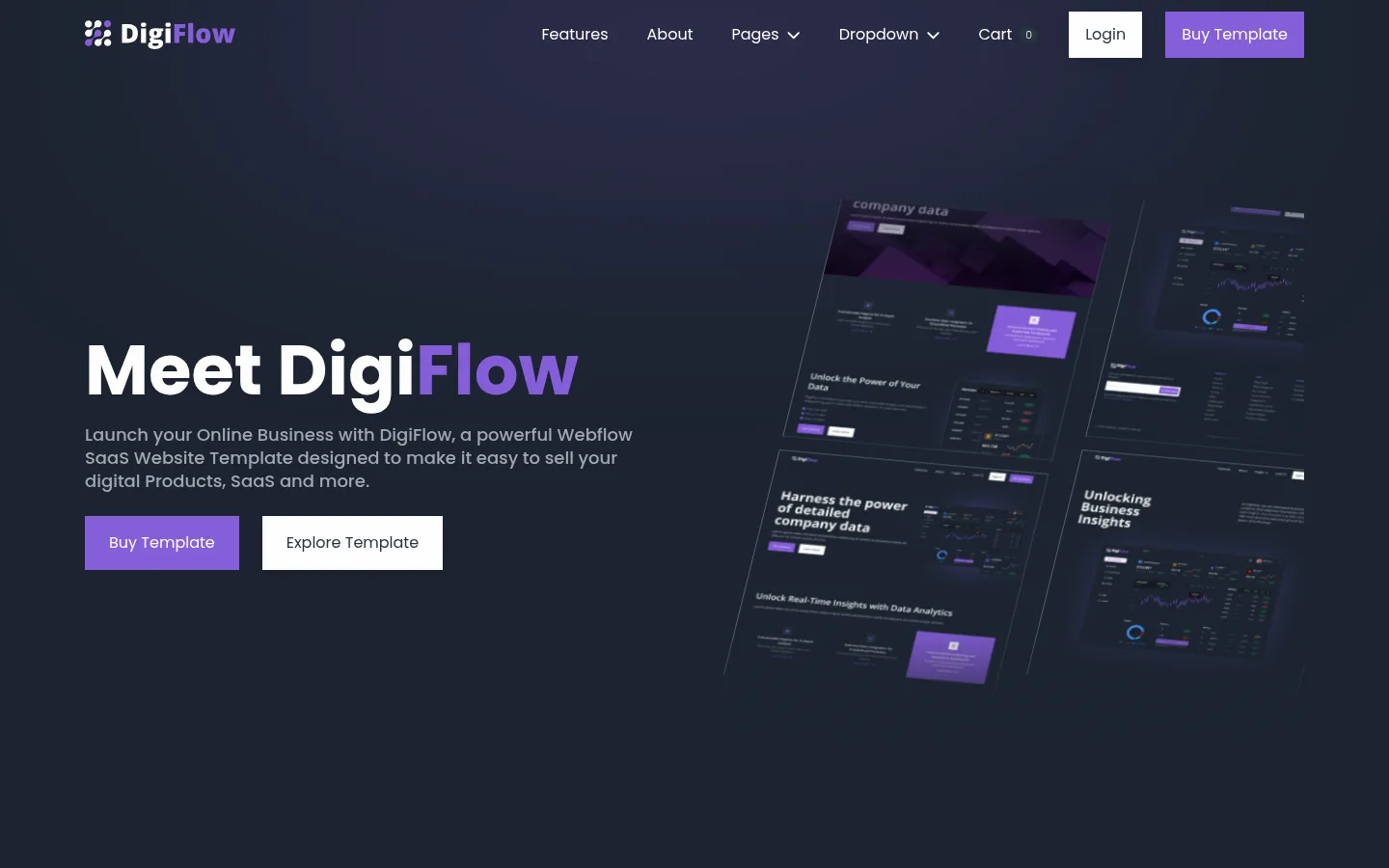
- DigiFlow — a SaaS template built for selling digital products, with 35+ pages, a free Figma file included, fully modular sections, and full CMS and e-commerce. Choose it if you're selling downloadable products alongside a SaaS offering.
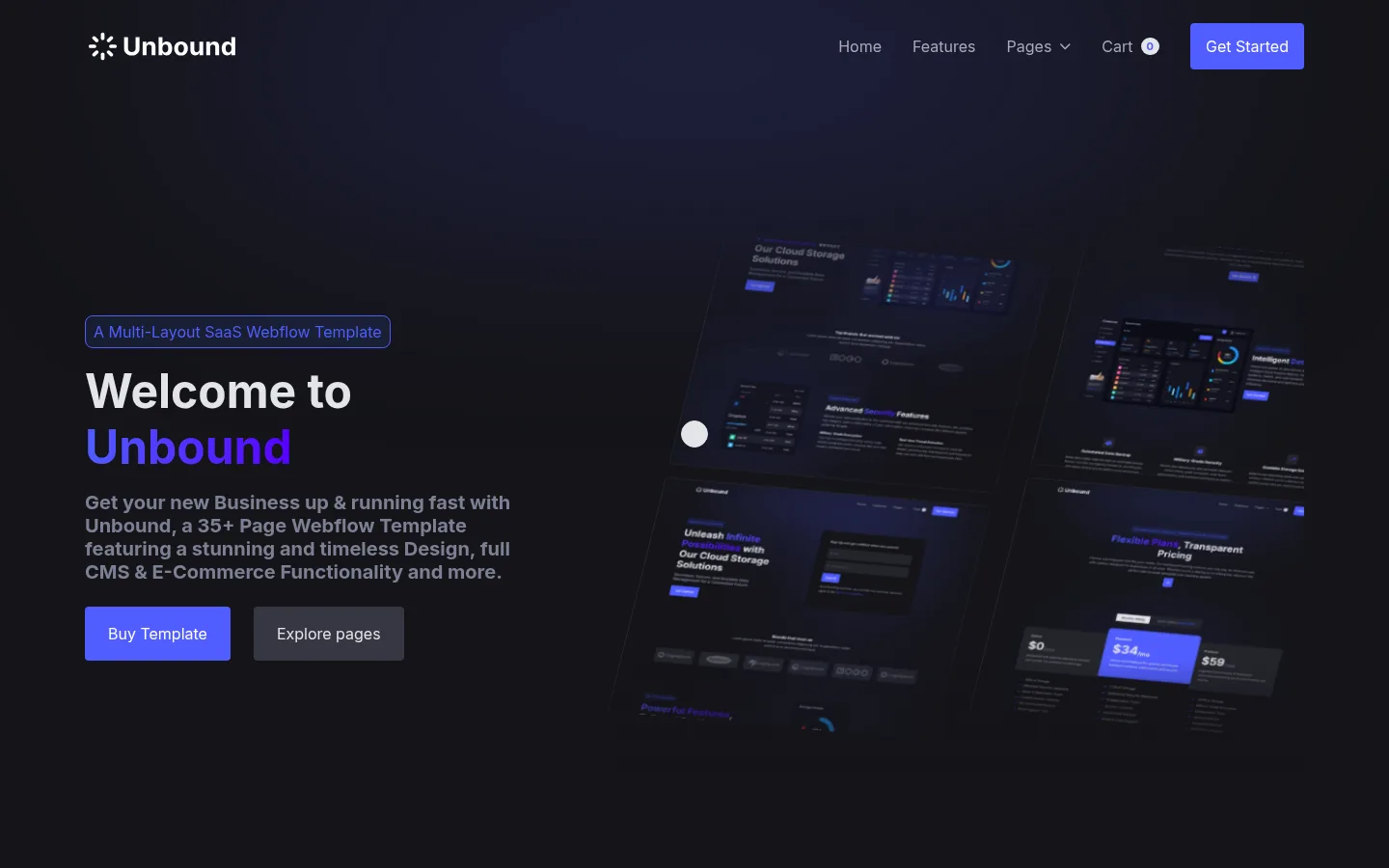
- Unbound — a 35+ page template with a "timeless" design, CMS, and e-commerce. Choose it if you want a durable, non-trendy aesthetic that won't look dated in three years.
The Dark-Mode Cluster: CodeFlow vs. DarkFlow vs. Synched
This is the question competitors can't answer honestly, because they don't own the catalog: we sell three dark-mode, multi-layout SaaS templates at $129, each with 35+ pages and full CMS and e-commerce. Here's how to actually choose between them.
- CodeFlow has the deepest page count (37) and is the most AI/SaaS-focused. It's the default pick unless you have a specific reason to look elsewhere.
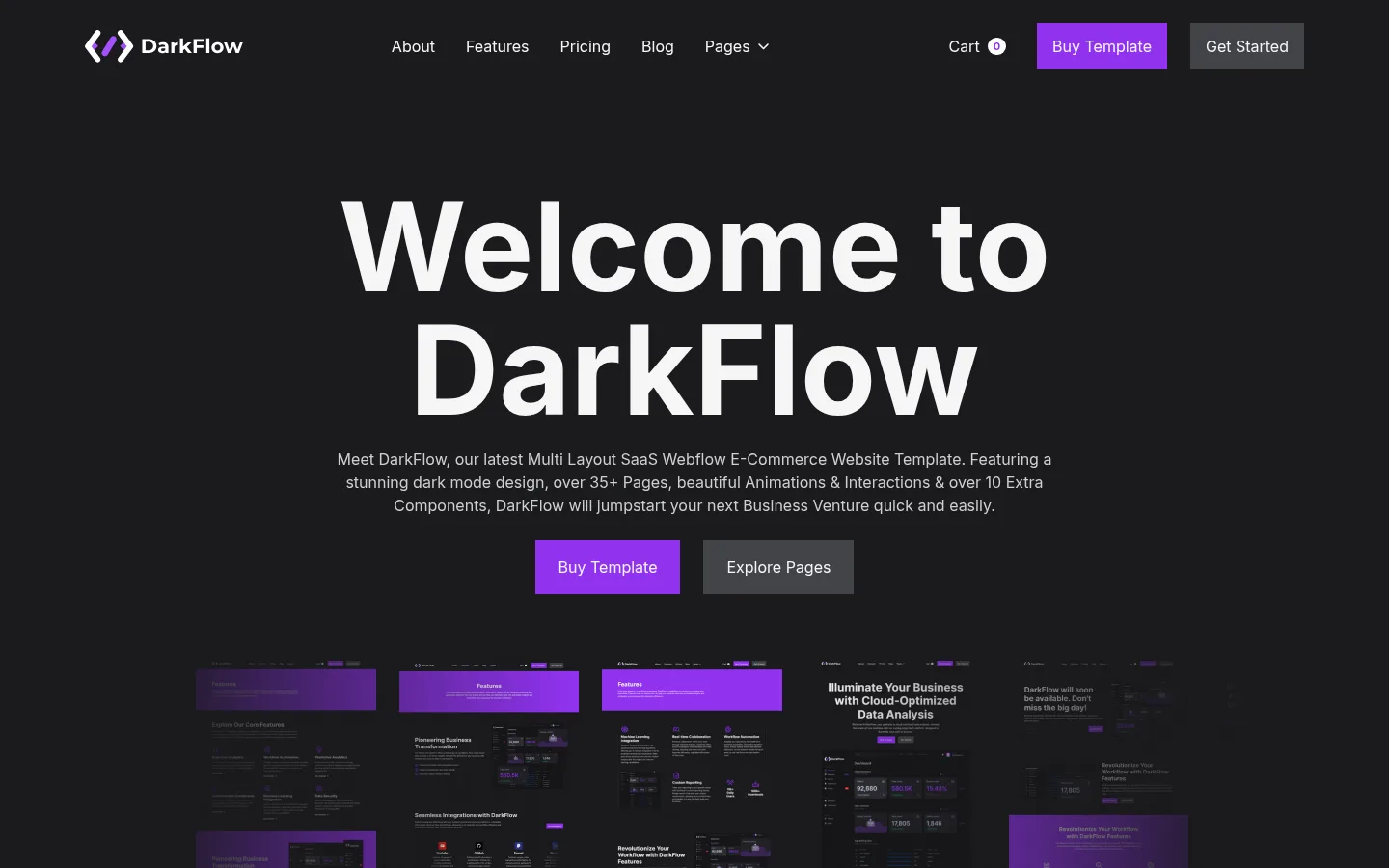
- DarkFlow matches CodeFlow on capability (35+ pages, e-commerce, 10+ extra components) but uses a different layout system and component set. Choose it if you've previewed both and prefer DarkFlow's specific section designs over CodeFlow's.
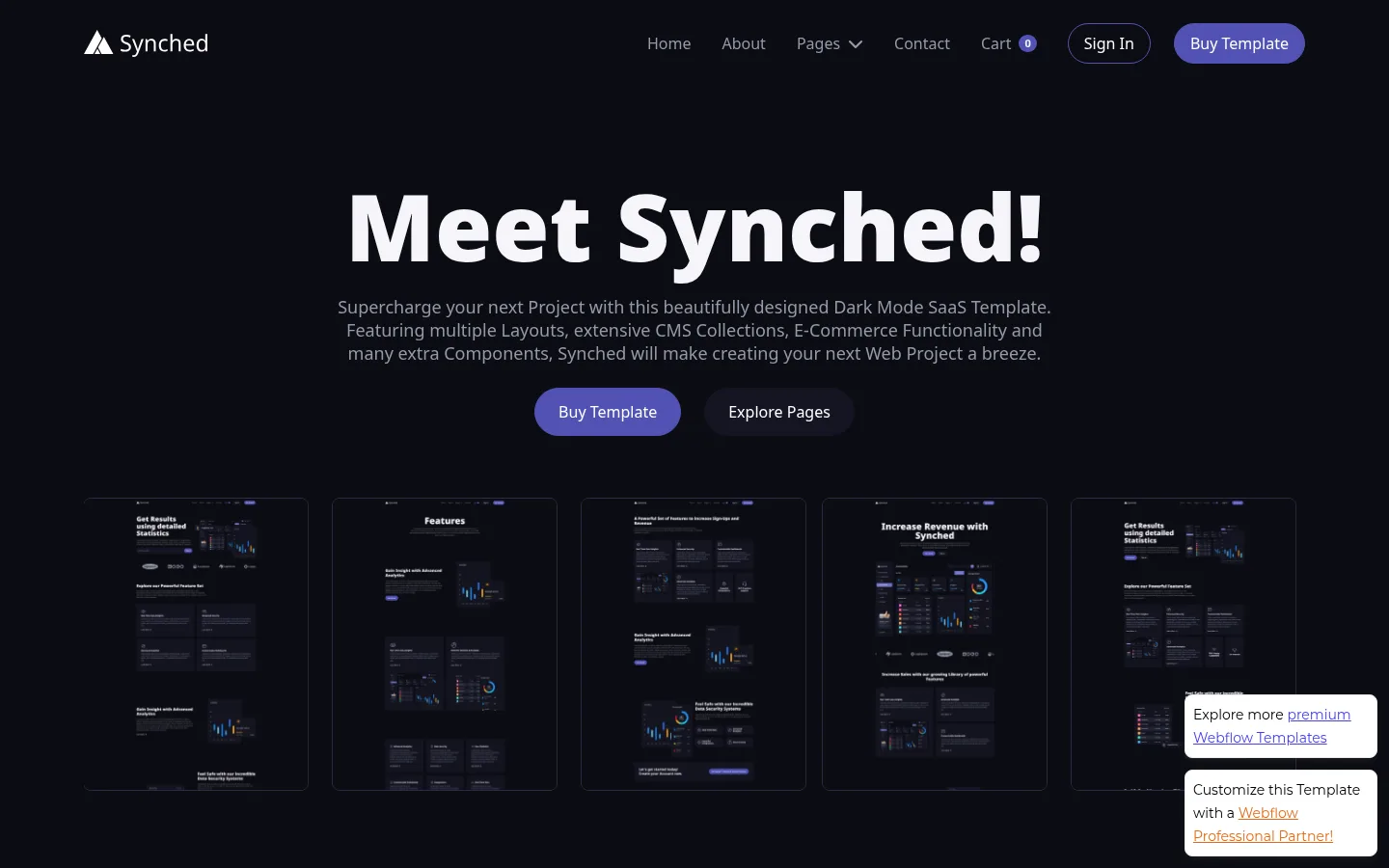
- Synched is the third dark option, again with 35+ pages and full CMS and e-commerce, plus multiple navigations, footers, CTA banners, and notification banners. Choose it if Synched's interaction set and banner system fit your marketing style better.
The honest summary: all three are excellent dark SaaS templates at the same price with the same core capability. The decision comes down to which layout and interaction set you prefer after previewing the live demos — not a spec difference.
How to Choose the Right SaaS Template
Three questions resolve roughly 90% of decisions, and they're worth answering before you scroll another listicle.
1. How many pages do you need now versus in 12 months? Pre-launch, you rarely need more than a home page, a blog, and legal pages — that's MugenAI territory at $29. Once you're growing and need marketing depth (integrations pages, case studies, a help center, multiple home variants), move to the $129 tier with 35+ pages. Buying a 37-page template before you have product-market fit usually means paying for pages you'll rewrite or delete.
2. Will you sell plans on-site? If your pricing and checkout need to live on the website itself, you need e-commerce — which is everything except MugenAI. If billing lives in Stripe or your app, you can skip e-commerce and choose purely on design and CMS depth, which keeps your options wide open.
3. Dark or light brand? Dark dominates AI, developer tools, and infrastructure companies; light reads as approachable B2B SaaS. We have a deep dark-mode cluster (CodeFlow, DarkFlow, Synched at $129; NightPulse, Obsidix, SaaFlow at $79) and a strong light cluster (NovaPlus, Zestful, DigiFlow, Unbound at $129; Saaporo, Cerulean, Syntelle, WaveStack at $79), so either direction has real options.
One more factor that's easy to overlook: a fast, SEO-ready template compounds. SEO traffic converts at 2.1% visitor-to-lead, compared to just 0.7% for PPC (Oliver Munro, 2026) — roughly 3x the efficiency. A template with clean structure and proper CMS is a long-term acquisition asset, not just a design choice. For the ongoing plan cost on top of the template, see our breakdown of Webflow's 2026 pricing.
Webflow SaaS Template vs. Custom Build: The Real Cost Math
A template costs $29 to $129 once. A custom SaaS marketing site from an agency costs $2,000 to $50,000+ and takes weeks. Unless you need bespoke functionality that no template can provide, a template wins on speed and cost — and then you customize it inside Webflow.
The numbers make the case plainly. SaaS marketing websites from agencies range from $2,000–$12,000 for page-template work up to $50,000+ for custom builds (Devolfs, 2026). Standard agency informational sites run $15,000–$25,000 (Dribbble, 2026). A full SaaS platform build starts at $50,000 and can exceed $500,000 (DigitalApplied, 2026). Against that, a $129 template pays for itself the first time you'd otherwise have requested a design revision from an agency.
What you give up with a template is bespoke functionality and unique brand distinction — a custom build can produce a site no competitor has. But most SaaS marketing sites don't need that level of distinction pre-Series A, and Webflow's no-code editor means you can customize typography, color, layout, and interactions heavily without touching the underlying advantage of starting from a proven structure. For most founders, the math is straightforward: buy the template, ship in days, and reinvest the $15,000+ you saved into product and acquisition.
Frequently Asked Questions
Which Webflow template is best for a SaaS startup?
For a full-featured build, CodeFlow ($129, 37 pages) is the strongest all-rounder for AI and SaaS businesses. For a budget launch, MugenAI ($29) gives you a credible home page, blog CMS, and legal pages without paying for capability you don't need yet.
Are premium Webflow SaaS templates worth it?
Yes, against a custom build. A SaaS marketing site from an agency costs $2,000–$50,000+ (Devolfs, 2026), while these templates cost $29–$129. The return on investment breaks even the first time you'd have requested a design iteration from an agency — and you ship in days instead of weeks.
How much does a Webflow SaaS template cost?
In this catalog, SaaS templates cost $29 to $129. The Webflow *plan* that hosts the site adds $15–$39/month on top — see our Webflow pricing breakdown for the current plan structure after the May 2026 update.
Can I sell SaaS subscriptions with a Webflow template?
Yes, if the template includes e-commerce. Most templates in this list do (Zestful, Saaporo, Cerulean, Unbound, and others), which means you can run pricing pages and checkout on-site. If you'd rather handle billing in Stripe or your application, you can skip e-commerce and choose any template on design and CMS depth alone.
Do these templates include CMS for a blog?
Yes — every template in this list includes CMS for a blog. Most $79–$129 templates go further, with multiple CMS collections for blog posts and categories, team members, integrations, job listings, and help center articles. Check the spec table above for the exact collection count per template.
Conclusion
The right SaaS template comes down to stage, e-commerce, and brand. If you're pre-launch and bootstrapping, MugenAI at $29 gets you online with a blog and clean code. If you're growing and need 35+ pages of marketing depth, the $129 tier — led by CodeFlow for dark/AI brands and NovaPlus for flexible light builds — replaces a $15,000+ agency engagement. And if you'll sell plans on-site, pick a template with e-commerce (which is nearly all of them).
- Pick by stage: $29–$79 for validation, $129 for growth
- The dark-mode cluster (CodeFlow, DarkFlow, Synched) fits AI and developer brands
- Confirm e-commerce if you'll sell plans on-site — Zestful, Saaporo, and Cerulean are built for it
- A template at $29–$129 beats a custom build at $2,000–$50,000+ for most pre-Series-A SaaS companies
Browse the full SaaS template collection, start with CodeFlow for the best overall option, or grab MugenAI for the fastest budget launch.


